
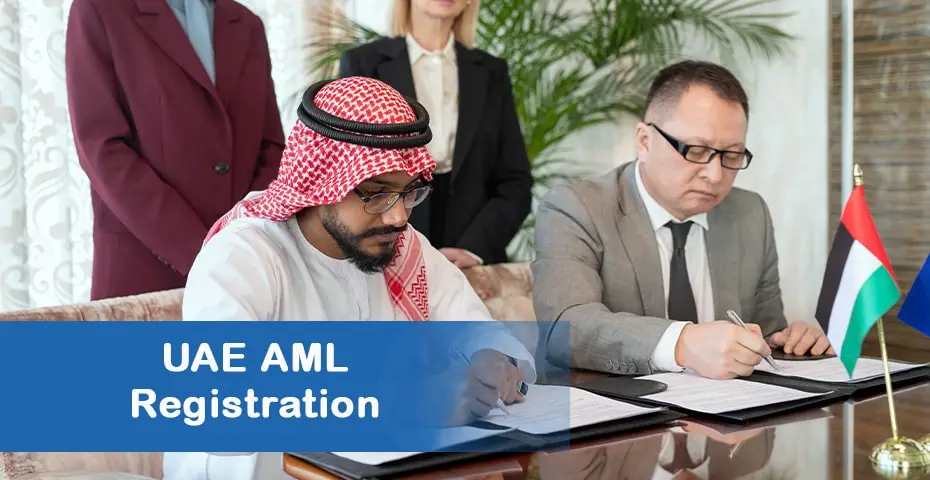
In today’s interconnected world, compliance is not just a regulatory requirement—it is a business advantage. One of the most important compliance measures for companies operating in the United Arab Emirates (UAE) is AML (Anti-Money Laundering) registration. Far from being a burden, AML registration is a strategic asset that strengthens trust, enables smooth international trade, enhances financial transparency, and protects businesses from regulatory and reputational risks.
This article explores in depth how UAE AML registration enhances global business operations and why it is essential for businesses of all sizes and industries.
What Is UAE AML Registration?
AML registration is the process through which businesses operating in the UAE—especially those classified as Designated Non-Financial Businesses and Professions (DNFBPs) and financial institutions—comply with national anti-money laundering laws.
This includes:
- Registering with the UAE Financial Intelligence Unit (FIU) via the goAML platform.
- Appointing an AML Compliance Officer or Money Laundering Reporting Officer (MLRO).
- Establishing internal compliance frameworks such as customer due diligence (CDD), enhanced due diligence (EDD), and transaction monitoring.
- Maintaining ongoing reporting, including the submission of Suspicious Transaction Reports (STRs) or Suspicious Activity Reports (SARs).
- Keeping records of transactions, customer details, and beneficial ownership data for specified retention periods.
Failure to register or comply can result in severe fines, restrictions, and even license suspension.
1. Boosting Credibility in Global Markets
For companies engaging in international trade or financial transactions, credibility is paramount. AML registration in the UAE signals to banks, investors, regulators, and business partners worldwide that your operations are transparent and lawful.
This credibility helps businesses:
- Gain trust from foreign investors and stakeholders.
- Stand out from competitors lacking compliance structures.
- Enhance brand image in sectors like finance, real estate, and professional services.
When compliance becomes part of your company’s identity, it reinforces your reputation globally.
2. Simplifying International Banking and Payments
One of the most immediate benefits of AML registration is the ease of banking. Financial institutions perform strict due diligence before onboarding clients, and businesses without AML registration often face delays, scrutiny, or outright rejection.
AML-registered companies enjoy:
- Faster onboarding with international banks.
- Fewer delays in processing cross-border payments.
- Reduced risk of being labeled “high-risk” and excluded by global banks.
By demonstrating compliance, businesses gain smoother access to global financial systems, making it easier to operate internationally.
3. Compliance with International Standards
UAE AML regulations are aligned with global standards such as those issued by the Financial Action Task Force (FATF). Businesses that comply in the UAE are often already aligned with expectations abroad.
This compliance ensures:
- Legal protection in multiple jurisdictions.
- Smoother trade across borders.
- Reduced risk of facing additional compliance checks from international partners.
For multinational companies or those seeking global expansion, AML registration provides a strong foundation for operating seamlessly across markets.
4. Protecting Against Legal and Financial Penalties
Non-compliance with AML regulations carries serious consequences. Penalties for failing to register or report suspicious activity can range from hefty fines to business license suspensions.
By registering, businesses:
- Avoid penalties that could severely impact cash flow and operations.
- Protect themselves from investigations that damage reputation.
- Ensure uninterrupted licensing and regulatory approvals.
Compliance is not just about avoiding fines—it is about securing the long-term viability of your operations.
5. Strengthening Internal Risk Management
AML registration requires businesses to implement robust internal controls. These measures, while regulatory in nature, also improve overall risk management.
For example:
- Customer Due Diligence (CDD): Understanding client backgrounds prevents exposure to risky transactions.
- Beneficial Ownership Transparency: Ensures your business is not unknowingly dealing with shell companies or hidden interests.
- Transaction Monitoring: Detects unusual or fraudulent activity early, safeguarding assets.
These internal systems minimize risks, protect company resources, and foster a culture of accountability.
6. Attracting Foreign Investment
Investors, especially from abroad, demand transparency. AML-registered businesses are more appealing to foreign direct investors because they provide:
- Assurances of legal and financial transparency.
- Reduced risk of regulatory investigations.
- Confidence that the business meets international governance standards.
For companies looking to raise capital, AML registration can be a decisive factor in securing investor trust.
7. Supporting UAE’s Role as a Global Business Hub
The UAE positions itself as a leading global hub for finance, trade, logistics, and innovation. AML compliance by businesses strengthens this reputation, ensuring the UAE remains attractive to multinational corporations.
For individual businesses, this creates:
- A stronger environment for cross-border partnerships.
- Increased opportunities in global supply chains.
- Easier participation in government and institutional projects that require compliance verification.
Being AML registered not only benefits your company but also contributes to the UAE’s broader global competitiveness.
8. Enabling Participation in Tenders and Contracts
Many large corporations, government agencies, and international organizations require proof of AML compliance from potential partners.
Without AML registration, businesses may be excluded from:
- Government tenders.
- International bidding opportunities.
- Contracts with multinational companies.
Compliance opens doors to opportunities that would otherwise be inaccessible.
9. Protecting Corporate Reputation
Reputation is one of the most valuable assets a business can own. Being linked to money laundering or terrorism financing—whether intentionally or unintentionally—can permanently harm credibility.
AML registration helps prevent reputational damage by:
- Proving your business takes compliance seriously.
- Ensuring you have policies in place to detect and report suspicious activity.
- Showing clients and partners that integrity is central to your operations.
In today’s fast-moving digital age, reputation can make or break a company. AML registration safeguards it.
10. Operational Efficiency and Long-Term Growth
While AML compliance requires investment in staff training, reporting systems, and compliance officers, it also creates efficiencies:
- Standardized processes reduce errors and fraud.
- Monitoring systems improve visibility into financial flows.
- Documentation ensures smoother audits and inspections.
In the long run, these efficiencies lead to more sustainable growth and smoother global operations.
The Role of an Accounting Firm in AML Compliance
For many businesses, navigating AML regulations can be complex. This is where an accounting firm becomes invaluable.
An accounting firm can:
- Advise whether your business falls under the AML registration requirement.
- Prepare compliance documentation, including risk assessments, policies, and UBO registers.
- Train employees to recognize suspicious activity.
- Assist with reporting obligations through the goAML platform.
- Ensure your business remains compliant with evolving regulations.
By working with an experienced accounting firm, businesses can turn compliance into a strategic advantage rather than a challenge.
How to Maximize the Benefits of AML Registration
To fully leverage AML registration for global success, businesses should:
- Appoint a dedicated compliance officer who manages AML responsibilities.
- Establish clear internal policies covering risk assessments, due diligence, and reporting.
- Train employees regularly to identify suspicious activities.
- Adopt technology for transaction monitoring and data management.
- Stay updated with regulatory changes in the UAE and globally.
Proactive compliance ensures that registration is not just a legal formality but a tool for growth.
Conclusion
UAE AML registration is more than a regulatory requirement—it is a cornerstone of global business success. From boosting credibility and attracting investment to protecting reputation and simplifying international banking, AML compliance enhances every aspect of operations.
Businesses that embrace AML registration are not only protecting themselves from risks and penalties but also positioning themselves as trusted, transparent, and globally competitive players.
For companies in the UAE looking to expand globally, secure investments, and strengthen their reputation, AML registration is not optional—it is essential.
If your business is seeking professional guidance on AML compliance, consider partnering with experts who understand both the regulatory landscape and practical implementation. With the right support, compliance can become one of your greatest strategic assets.